
Liverpool vs Villarreal: headers and Ngumoha's creativity drive the comeback
Goltiki editorial team ·
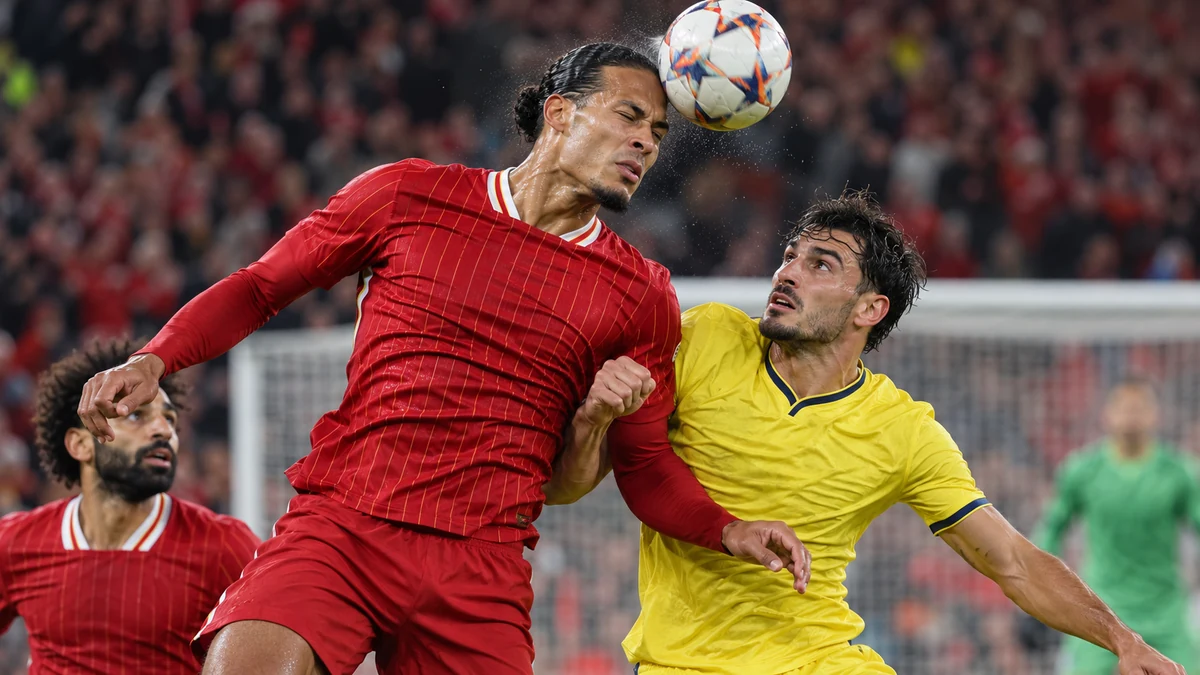
Liverpool beat Villarreal 4–3 at Anfield on Tuesday 20 October 2026 after falling two goals behind. Reading the club report alongside UEFA's summary reveals two connected stages of the comeback: erasing the deficit before the break, then turning second-half chance creation into a lead. Villarreal's late goal shows why protecting the result remained an important part of the win.
Two headers restore parity before the break
Villarreal went ahead through Georges Mikautadze, then Sergi Cardona added the second at around the half-hour mark. The response began with Alexis Mac Allister's header from a Kostas Tsimikas corner, before Ronald Araújo equalised with another header from Rio Ngumoha's cross before half-time.
In our reading, the value of that equaliser lay in its timing. Liverpool ended the half having removed the two-goal deficit, leaving a full half to seek the lead from level terms. The way both goals came showed the importance of reaching balls inside the box: a corner first, then a cross to the far post. Two successful finishes became the foundation of the comeback, after early possession had failed to prevent Villarreal building a clear advantage.
Ngumoha turns penetration into a decisive pass
Liverpool's report notes that goalkeeper Péter Gulácsi saved efforts from Ryan Gravenberch, Cody Gakpo and Florian Wirtz after the break. Ngumoha then evaded several challenges and laid the ball off for Mac Allister, who scored his second and put his team ahead.
Comparing the two halves helps define that improvement. The club report described possession and territorial progress early on while the goalkeeper remained largely untroubled, then recorded multiple saves after the break. In our reading, getting towards goal became more effective when attacks ended in attempts requiring intervention, then passes allowing close-range finishes. That sequence gives the go-ahead goal its context: Ngumoha's creativity completed a period of sustained threat, before Wirtz's goal increased the value of the turnaround on the scoreboard.
Here Ngumoha's value in opening a new route to goal becomes clear. He created the equaliser with a cross, then used penetration and a pass to turn the score in Liverpool's favour. Mac Allister connected that creativity to finishing from inside the area. Our reading is that the variety between crossing and getting close to goal helped the team turn pressure into goals.
Wirtz's goal gives the margin its value
Three minutes after the go-ahead goal, Wirtz scored from Gakpo's pass to make it 4–2. When Tani Oluwaseyi reduced the deficit near the end, the fourth goal's effect became immediately apparent: Liverpool remained one goal ahead until the final whistle.
With Ayoze Pérez hitting the post before Oluwaseyi's goal, the limits of feeling safe with a two-goal lead stand out. Liverpool claimed a third win in three Champions League matches this season, but in this game they needed to keep scoring after drawing level. The clearest footballing lesson is the combination of quickly restoring parity and creating fresh chances, followed by the need to manage a finish that remained open.