
Messi and the 2022 World Cup — from Barcelona's napkin to the trophy in Lusail
الإيطالي ·
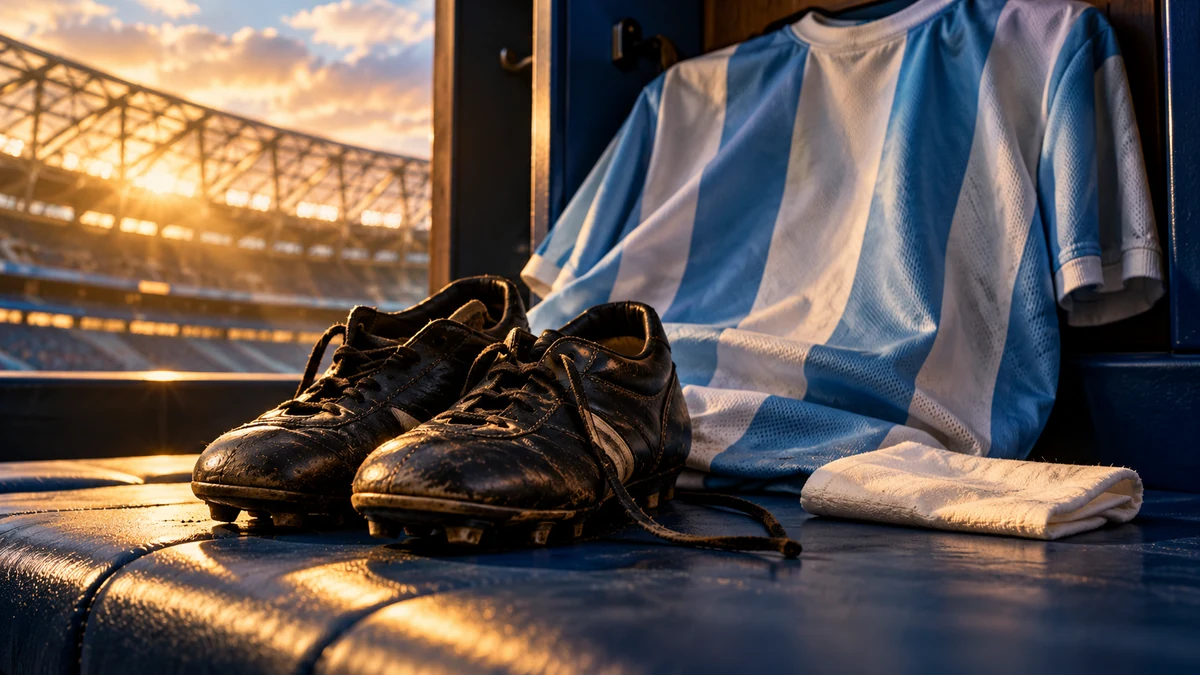
18 December 2022. Lusail stadium. Messi stands on the final step, the trophy at last within reach. Between him and this moment lie years of running, finals he left in silence, and a question repeated more than any other: when? That night, Argentina beat France on penalties and Messi became a world champion. But to understand the trophy's weight, we must return to a very small piece of paper.
A napkin carrying a promise
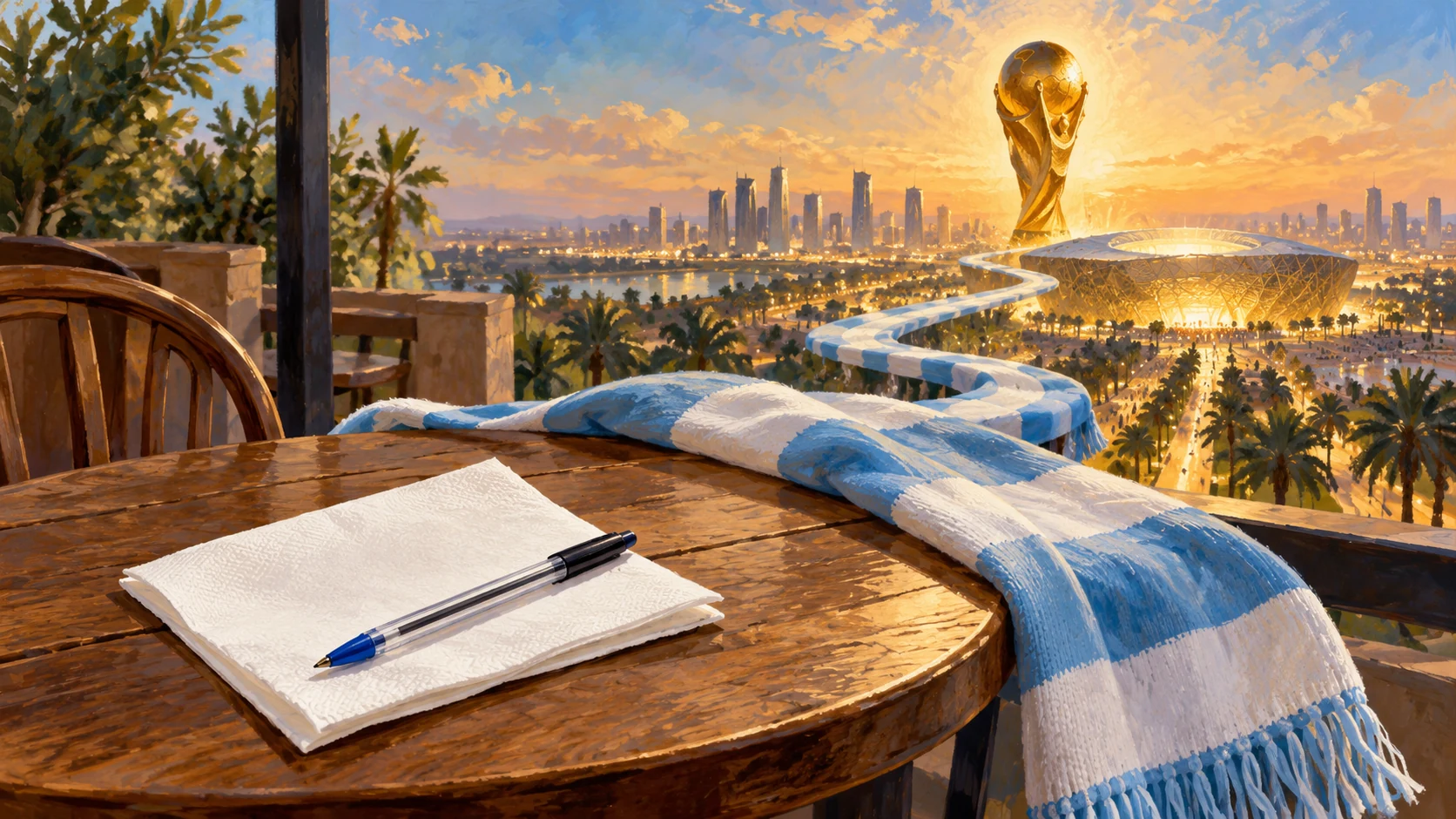
14 December 2000. A tennis club in Barcelona. Carles Rexach, alongside Josep Maria Minguella and Horacio Gaggioli, put down an agreement that would open a path for a 13-year-old Argentine boy. Rexach asked for paper and was given a napkin; on it he wrote a commitment to sign Lionel Messi.
The napkin was a preliminary agreement followed by a more detailed formal contract. It is enough that a step of such significance was recorded on paper anyone might fold up and throw away. A small napkin would remain tied to the beginning of a great journey, and whenever you remember its ending in Lusail, you look back at the first line and marvel at the distance. Sometimes football places its opening page where nobody thinks to look.
The boy who grew up on the pitch
Messi played for Newell's Old Boys in Rosario, then arrived in Barcelona aged 13. He progressed through the youth sides until 16 October 2004: his official first-team debut, against Espanyol. Months later, on 1 May 2005, he scored his first official goal against Albacete, from a Ronaldinho pass and a chip over the goalkeeper.
The touch was small, but the door it opened was wide. In 2007, he scored a hat-trick against Real Madrid in a 3–3 draw at Camp Nou. The boy could now shoulder the responsibility of a Clásico night, making the stands wait for the ball at his feet as though waiting for the opening sentence of a familiar story they wanted to hear again.
Barcelona fills the book
In 2009, Barcelona won six trophies during the year under Pep Guardiola. In 2015, with Luis Enrique and the Messi, Suárez and Neymar front three, the club achieved its second treble: the league, cup and Champions League. Between those nights came 2012, when Messi scored 91 goals in the calendar year, the figure recorded by Guinness.
When his Barcelona journey ended in 2021, his tally stood at 672 official goals, alongside ten La Liga titles and four Champions Leagues. A record so full that you need to slow down to read it. Yet a chapter with his national team still demanded a different ending.
The trophy that kept moving one step away
The 2014 World Cup final in Brazil went to extra time. Argentina against Germany, the goal still closed, until Mario Götze scored the winner in the 113th minute. Messi left the tournament with the best player award, but the trophy went the other way. A major individual prize, a collective dream postponed.
Then came the 2015 Copa América final, followed by the 2016 final: two penalty-shootout defeats by Chile. In the second, Messi missed his kick and afterwards announced he would not continue with the national team. Anyone watching him then knew that defeat sometimes shows more in the way someone walks than in the score.
Coming back takes time
On 12 August 2016, Messi's name appeared in Edgardo Bauza's first squad, following his retirement announcement in June. There was still a road ahead, and the shirt could still call its owner. In football stories, a return carries weight of its own: stepping onto the pitch again, leaving the old result in memory and giving a new attempt its due.
In 2021, the ending finally changed: Argentina beat Brazil in the Copa América final, and Messi won his first major senior international title. In 2022 came a 3–0 win over Italy in the Finalissima. There was now gold in the story, and the trip to Qatar carried a more clearly shaped hope.
Saudi Arabia shook the journey's beginning
22 November 2022: Saudi Arabia beat Argentina 2–1. A painful opening for a team dreaming of the trophy, particularly as Messi was beginning the fifth World Cup of his career. But defeat remained the tournament's first line; what followed was still waiting to be written.
Argentina responded by beating Mexico 2–0, then Poland 2–0. They went past Australia 2–1, the Netherlands on penalties after a 2–2 draw, then Croatia with three unanswered goals. Six matches after Saudi Arabia, seven in the whole journey. Messi at the heart of the picture, surrounded by a team that knew how to rise every time.
Messi and the 2022 World Cup: the night in Lusail
The final against France began as though Argentina had found their route: Messi from the penalty spot, then Di María, and a 2–0 lead. Suddenly Kylian Mbappé brought France back with two goals. In extra time Messi put Argentina ahead again; Mbappé equalised again. 3–3, hearts moving with every ball.
Emiliano Martínez saved a dangerous Kolo Muani chance near the end, then came the test of the shootout. Messi scored, Martínez saved Coman's penalty and Tchouaméni shot wide. When Gonzalo Montiel converted the decisive kick, Argentina had won 4–2, and the old distance between Messi and the trophy disappeared.
Messi finished Qatar's World Cup with seven goals, including two in the final, and won the best player award. The player hurt by the ending in 2014 returned in 2022 and lifted the trophy. Here, joy has faces: people who ran with him, people who waited with him, and a whole team that arrived.
The story kept leaving its mark
In a later chapter, during 2023, Messi joined Inter Miami and helped them win the Leagues Cup, the first official senior first-team trophy in the club's history. In October that year he won his eighth Ballon d'Or. Those milestones have their own dates; the heart of our story remains the night of 18 December 2022.
The napkin returned to the news too, when it sold at Bonhams in 2024 for £762,400 including fees, according to an Associated Press report citing the auction house. A piece of paper carrying a promise from the beginning, and a trophy carrying the toil of arrival. Between them, a life written through football.
Why does Lusail stay in memory?
Because a great night carries what came before it. Watching Messi lift the trophy in 2022, you might remember Ronaldinho's pass, Camp Nou, the final in Brazil, the return after 2016 and Saudi Arabia at the start of the journey. Many images gathered into one moment, without erasing the old defeats.
From Barcelona's napkin to the trophy in Lusail, football took its time writing the story. Perhaps that is why we return to read it: the long road, with all its toil, reached a joy that night worthy of the journey.
The goal reaches you in a second — Goltiki ⚽
Sources
- FC Barcelona — Leo Messi
- FC Barcelona — Messi's first official goal
- FC Barcelona — Leo Messi gets 30th hat-trick
- Guinness World Records — Most football goals scored in a calendar year
- FIFA — Germany and Götze's goal in the 2014 final
- FIFA — Messi in Bauza's first squad
- AFA — Argentina beat Italy 3–0
- AFA — the seven wonders
- AFA — report on the Qatar 2022 final
- Inter Miami — report on the 2023 Leagues Cup title
- Inter Miami — Lionel Messi Wins Eighth Ballon d'Or
- Associated Press via ABC News — sale of Messi's napkin in 2024
- FC Barcelona — Claudio Bravo, hero of the Copa América final