
The Panenka penalty: the touch that settled Euro 1976
الإيطالي ·
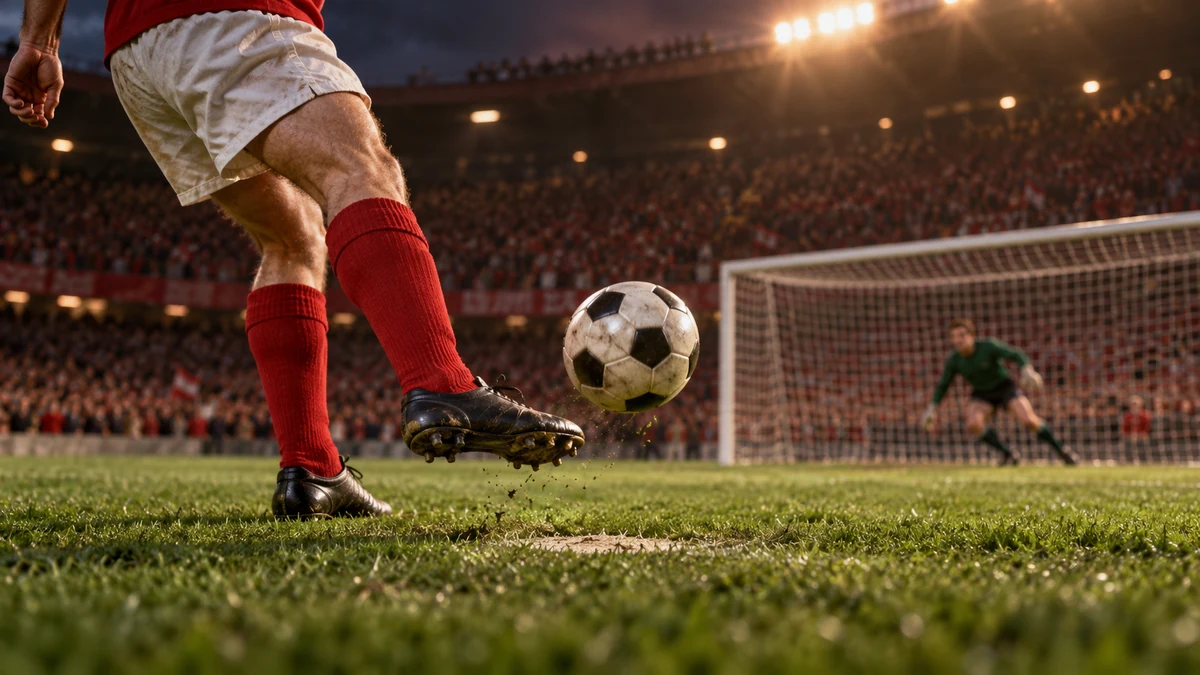
20 June 1976, Red Star stadium in Belgrade. The ball is on the penalty spot, Sepp Maier is on the line, and Antonín Panenka has the chance to finish the European final with a single touch. You can imagine the scene while waiting for a shot to rip through the net. What happened was much quieter: the ball floated gently down the middle while the goalkeeper went another way. From that moment, the touch had a name.
Belgrade: the trophy on the tip of a boot
Czechoslovakia reached the final after beating the Netherlands 3–1 after extra time. Opposite them stood West Germany, reigning European and world champions: a team that knew how to come back, and did just that. Ján Švehlík and Karol Dobiaš put Czechoslovakia two ahead, Dieter Müller reduced the deficit and Bernd Hölzenbein equalised before the end of normal time. The match finished 2–2 after 120 minutes and went to penalties.
The first seven penalties went in. Then Uli Hoeneß sent Germany's fourth over the bar, leaving Czechoslovakia 4–3 ahead. Panenka, their fifth taker, could settle the tournament by scoring. He ran towards the ball, Maier dived, and a gentle touch floated through the centre of the goal. A 5–3 shootout win, the trophy for Czechoslovakia. A shot that did not need a loud sound to live in memory.
This was the last European Championship with a four-team final tournament: two semi-finals, a third-place match and the final. Four years later, the finals expanded to eight teams in Italy in 1980. Belgrade's tournament was small in numbers, but the image of its final penalty travelled far beyond its boundaries.
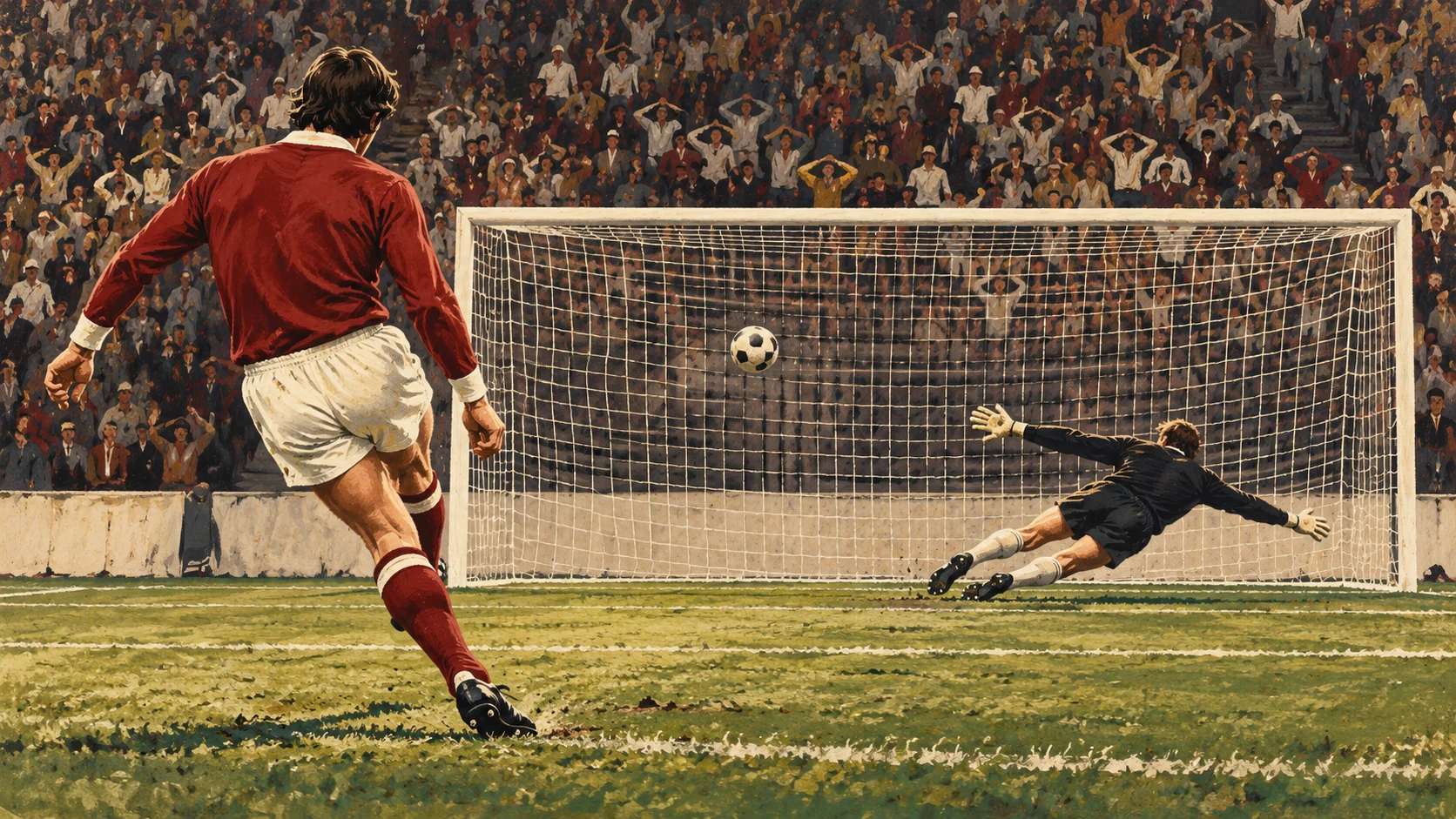
Before fame: a goalkeeper, chocolate and a glass of beer
To understand that composure, return to Bohemians in Prague. Panenka joined the club as a child in 1959 and made his league debut in 1968. Before his name became shorthand for a penalty, he was a midfielder with many years at the club, rather than someone who suddenly appeared for one moment in a final.
Even the kangaroo on Bohemians' badge has a real story: the team travelled to Australia in 1927 and returned with two kangaroos as a gift for President Masaryk. After the tour, the club kept the Bohemians name and chose the kangaroo for its badge. An unusual detail, older than Panenka himself, and part of the history of the place where his idea developed.
Panenka told UEFA that he used to stay after training with his team's goalkeeper, challenging him at penalties for a bar of chocolate or a glass of beer. The keeper was good and Panenka kept losing, so before sleep he began thinking about how to turn those losses around. His idea: delay the touch and gently lift the ball; a goalkeeper who had dived towards a corner would not be able to get up and return to the middle.
He began trying it gradually, using it in friendlies and less important games, then in the league. Describing the wagers, he joked that he had started putting on weight because he was winning so much. That is how its creator told the story: an attempt repeated and refined until it reached the biggest night of his career. What looked like a sudden inspiration in front of Maier had a life before Belgrade.
What is a Panenka penalty?
The Panenka relies on timing before power. A chipped touch down the middle exploits the goalkeeper's decision to dive to one side. In the replay, that is its beauty: the goal itself has not changed, but the keeper's movement opens a path for the ball through the place where he stood a moment earlier.
If the goalkeeper stays still, the gentle touch may be easy to save. That is why the scene stays tense however often you watch it: a relatively slow-moving ball, and a penalty's future depending on a decision made a fraction of a second before. The answer looks simple once it has happened; the person on the spot must choose it before knowing the result.
Zidane, Pirlo and Ramos: the touch keeps travelling
In the 2006 World Cup final, Zinedine Zidane chipped the ball past Gianluigi Buffon; it struck the bar and went in, putting France ahead. But the trophy ended in Italy's hands after a 1–1 draw and a 5–3 shootout win. The touch succeeded and the final went another way: a beautiful image within a story that was harsh on its creator.
In the Euro 2012 quarter-final, Andrea Pirlo did it against Joe Hart. He told UEFA that he noticed the goalkeeper's movements and decided during his approach to chip down the middle. Italy were behind in the shootout; his penalty brought them level before they went on to eliminate England. The same old touch, on a night with its own pressure and protagonist.
Sergio Ramos' 2012 story has two scenes. Against Bayern Munich in the Champions League semi-final, his penalty flew high over the bar. Later, in the European Championship semi-final against Portugal, he scored a successful Panenka past Rui Patrício. He told UEFA that the reaction to his miss had hurt his pride and that he wanted to prove his readiness to take responsibility. Between the two kicks: two months, and a player standing on the spot again.
A name that travels with the ball
Every time a ball rises that way, Panenka's name returns with it. The new taker may be a bigger star, the stadium larger, the cameras more numerous; still the touch draws memory back to Belgrade: a moving goalkeeper and a gentle ball passing through the space he left. Between post-training wagers and the European trophy, a man turned a small idea into a scene football still loves to tell.
The goal reaches you in a second — Goltiki ⚽
Sources
- UEFA — EURO 1976: All you need to know
- UEFA — Panenka makes his name as Czechoslovakia beat West Germany in EURO 1976 final shoot-out
- UEFA — EURO 1980: All you need to know
- Bohemians Praha 1905 — club history
- FIFA — the Panenka never goes out of style
- UEFA — Italy prevail after shoot-out drama
- UEFA — My Magic Moment: Pirlo's Panenka penalty
- UEFA — EURO 2012 technical report
- UEFA — Spot-on Bayern edge Madrid thriller to reach final
- UEFA — proud Ramos wants to make history