
PSG 4–2 Barcelona: answering Yamal and finding different ways to win
Goltiki editorial team ·
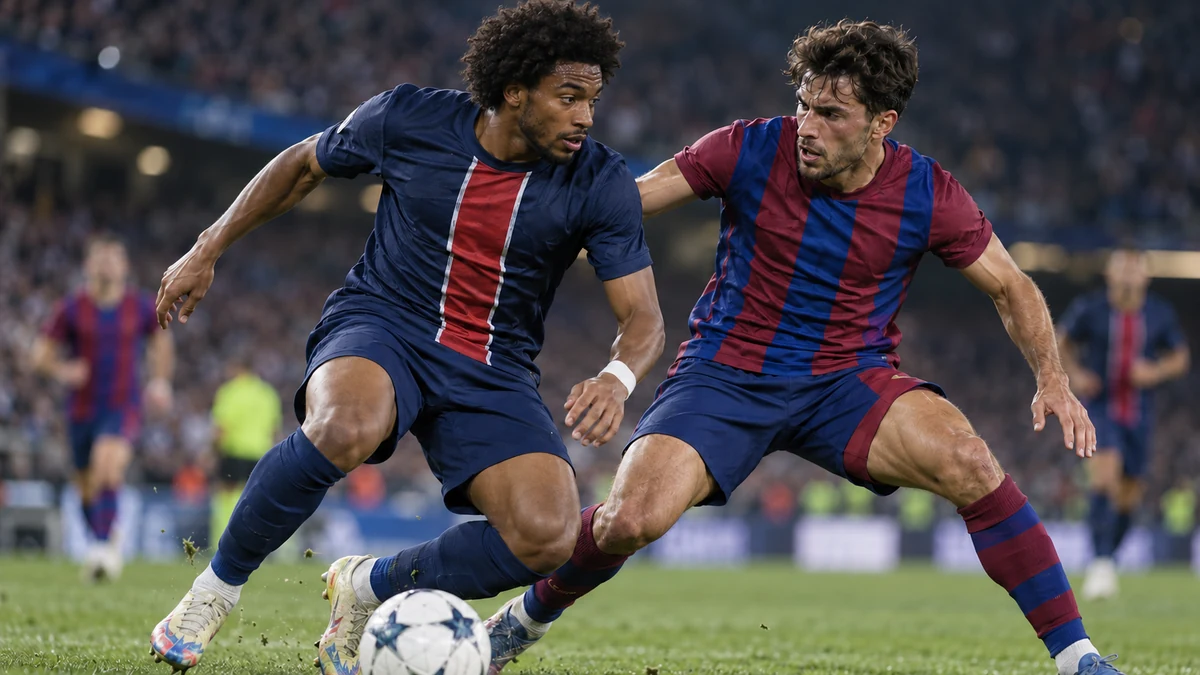
Paris Saint-Germain beat Barcelona 4–2 at the Parc des Princes on Tuesday 20 October 2026, in a match the Spanish side twice brought level. Explaining the final margin requires looking particularly at what happened after the second equaliser: Lamine Yamal scored in the 79th minute, then Vitinha restored Paris' lead in the 81st. In our reading, that quick reply denied Barcelona much time to build on their comeback, before Fabián Ruiz extended the advantage near the end.
The goalkeepers kept the match open
Paris ended the first half ahead through Désiré Doué's 38th-minute goal, amid chances at both ends. Barcelona's report records Matvei Safonov saves from Raphinha and Fermín López, and important interventions by Joan García at the other end. Those events allow a more precise reading of half-time: a one-goal lead did not establish that the contest for chances was settled. The keepers preserved a margin that one successful attack could overcome, as Barcelona later demonstrated.
Xavi Espart equalised in the 55th minute from Fermín's pass, while the Catalan club's report recorded Barcelona's improvement after the break and attempts by Gavi and João Cancelo saved by Safonov. Our reading is that the first equaliser came within a clear spell of threat, rather than as an isolated opportunity detached from the play. Meanwhile, the goalkeeper's continued saves gave Paris time to seek their next lead. The final score alone is therefore insufficient to describe phases in which Barcelona could reach the goal.
Two minutes changed the meaning of the second equaliser
Lucas Hernández restored Paris' lead with a header from a corner in the 72nd minute, before Yamal replied seven minutes later. This was Barcelona's second comeback, but its effect on the scoreboard was brief: Vitinha's 81st-minute goal put Paris ahead again. The difference was both temporal and footballing: Barcelona needed to create another equaliser, while their opponents could manage the remaining minutes from a winning position.
UEFA's summary describes Vitinha controlling the ball with his chest before a precise finish; Barcelona's report places his shot at the edge of the box. In our reading, this goal added a different answer from Hernández's header. Paris regained the lead from a set piece, then did so again with a finish from the edge of the area. The variety of those routes explains how they kept scoring after Barcelona found a reply to the previous goal, without assuming a tactical switch or instructions that neither source reports.
The fourth goal rewards the use of space
Barcelona's report links their push for a third equaliser to the appearance of space behind them, before Fabián Ruiz's goal. The tournament summary identifies Achraf Hakimi's role in delivering the cross Fabián finished. Here the sources give us a direct reason to understand the ending: the attempt to erase the deficit left room for another attack, and Paris turned it into a two-goal cushion. We treat this as a description of that phase, without extending it to every minute of the match.
Comparing the final two goals reveals two different functions. Vitinha restored the advantage immediately after Yamal's equaliser; Fabián then reduced Barcelona's ability to return with a single attack. In our reading, Paris combined quickly regaining the lead with expanding their safety margin after neither earlier lead had lasted. Barcelona showed an ability to respond twice, but that attacking ability did not prevent them conceding again each time they drew level.
Paris thus claimed a third win from three matches in the Champions League league phase. The clearest angle on the victory remains in the match's own details: saves that kept their chances alive, leads renewed in different ways, then space exploited when their opponents had to chase. The two-goal margin therefore looks like the conclusion of a sequence of successful responses, while the timing of Vitinha's goal remains the key dividing point in explaining how the match was settled.