
Maracanazo 1950: Brazil, Uruguay and the cup that changed course
الإيطالي ·
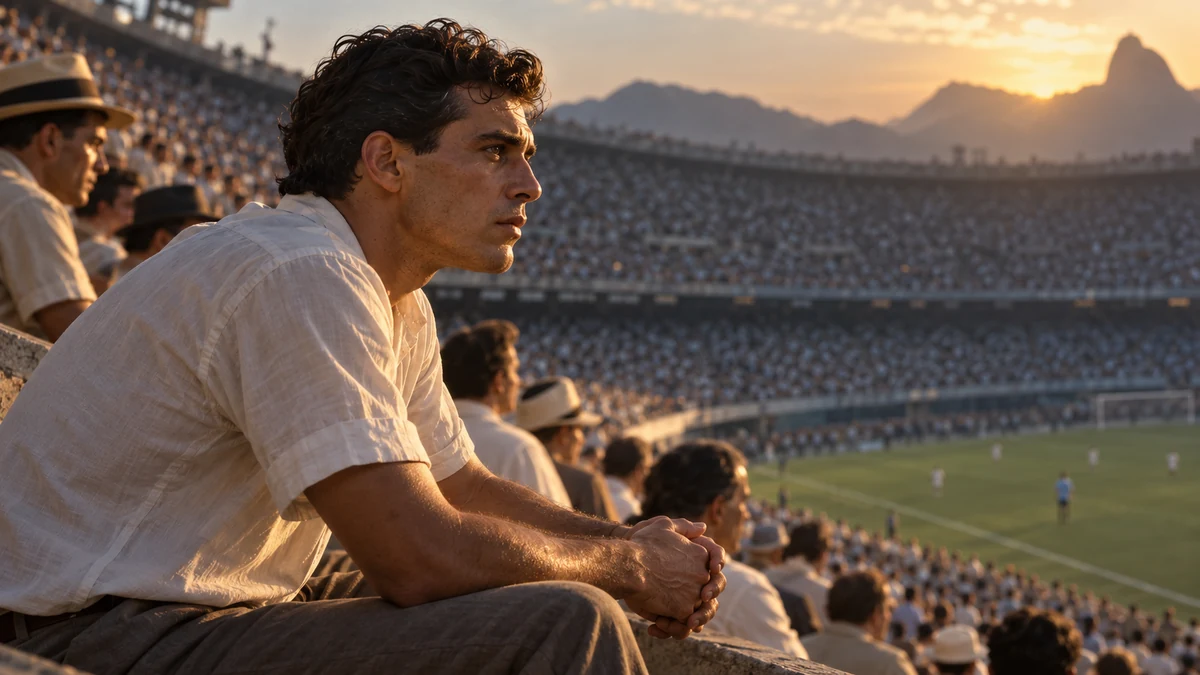
An AI-generated artistic illustration inspired by the 1950 Maracanazo between Brazil and Uruguay; not an archival photograph.
The story of the 1950 Maracanazo was written on 16 July at the Maracanã in Rio de Janeiro, where Uruguay beat Brazil 2–1 to win the World Cup. The match became known as the Maracanazo, its legacy shaped by the distance between expecting victory and securing it. Brazil opened the second half with a goal, but left without the trophy that a draw alone would have given them.[FIFA_MATCH][FIFA_FAVOURITES]
Maracanazo 1950: a final group to decide the title
The World Cup returned in Brazil after a twelve-year interruption caused by the Second World War. This edition was decided by a final group of four teams: Brazil, Uruguay, Sweden and Spain. Each side played the other three, with top spot securing the title. The Maracanã encounter was therefore a title decider, rather than a stand-alone knockout final.[CBF_1950][AUF]
In the opening round of the final stage, Brazil beat Sweden 7–1, then defeated Spain 6–1. Thirteen goals in two matches made the expectation of a title understandable. On the other side, Uruguay drew 2–2 with Spain before beating Sweden 3–2. That sequence of results gave Brazil a clear advantage before their last meeting: a draw would be enough for the hosts, while Uruguay needed to win.[FIFA_FAVOURITES]
173,850 officially — and a higher unofficial figure
Guinness records an attendance of 173,850 and describes it as the largest official attendance at a football match. It also gives an unofficial figure of 199,854, around two hundred thousand. The record explains that thousands entered without tickets, leaving an official count and a broader estimate of the crowd. Behind those numbers were stands so vast that the venue’s name became the title of the story.[GUINNESS]
Three goals that took the cup to Uruguay
The first half ended goalless. According to FIFA’s record, Friaça put Brazil ahead in the 47th minute, before Juan Alberto Schiaffino equalised in the 66th. Even then, a draw was still enough for the hosts. But Alcides Ghiggia scored Uruguay’s second in the 79th minute, making it 2–1 and changing the whole equation.[FIFA_MATCH][AUF]
Brazil’s pre-match advantage was real in the group standings. It still depended, though, on what would happen on the pitch. Ghiggia’s goal drew the line between a result that would crown the hosts and one that would give Uruguay the title. That is where the story draws its power: a change of destiny within the match itself.[FIFA_MATCH]
Uruguay finished as champions, Brazil second, Sweden third and Spain fourth. Those places were settled at the end of the final stage, without an additional third-place match. Brazil’s impressive run before the decider became part of the explanation for the upset, but it did not change the final order.[FIFA_SPAIN][CBF_1950][AUF]
From the white shirt to the 1953 design
Brazil’s kit changed some years after the tournament. The country’s sports governing body at the time held a competition with the newspaper Correio da Manhã to choose a kit combining the colours of the national flag. Aldyr Garcia Schlee was announced as the winner in late 1953, and the yellow shirt made its debut against Chile on 28 February 1954. Between the competition and that first appearance, the design took shape: yellow and green for the shirt, blue and white for the shorts.[CBF_SHIRT_REPRINT]
In 1958, Brazil won their first world title in Sweden, beating the hosts 5–2, with Pelé aged seventeen. It was a new chapter of victory, eight years on from 1950, while the Maracanazo remained a chapter with its own players, circumstances and result. Brazil’s closeness to the cup in 1950 was real, and so was Uruguay’s achievement in taking it. The story lives between those two truths.[CBF_1958]
The goal reaches you in a second — GOLTIKI ⚽
Read more
Baggio and the penalty in the 1994 World Cup final
Panenka: the story of the penalty that bears his name
Maradona and Napoli: the story of a city and a player
Sources
- [FIFA_MATCH] FIFA — Uruguay’s stunning upset of Brazil | Maracanazo
- [AUF] Asociación Uruguaya de Fútbol — 16 July 1950: the day the Maracanazo was born
- [FIFA_FAVOURITES] FIFA — What happened to the FIFA World Cup favourites?
- [GUINNESS] Guinness World Records — Largest attendance at a football match
- [CBF_1950] Confederação Brasileira de Futebol — Brazil at the World Cup: runners-up at the Maracanã in 1950
- [FIFA_SPAIN] FIFA — Spain World Cup history, records and 2026 results
- [CBF_SHIRT_REPRINT] CBF Press Office; republished by the Brazilian Futsal Confederation (CBFS) — Amarelinha: 70 years since the debut of the shirt that embodies Brazil
- [CBF_1958] Confederação Brasileira de Futebol — The heroes of the 1958 World Cup in Sweden